Solar vs Lunar Eclipse
Two shadows. Two incredible cosmic events.
Move the slider below or click the mode buttons to watch the Moon, Earth, and Sun align in real time.
Mode: Solar Eclipse Alignment
Illustrative visualization — distances and sizes adjusted for educational clarity and are not to scale.
Three Ways to Explore the Shadows
Toggle between preset modes or take manual control to build real intuition about orbital positions.
Solar Eclipse Mode
Aligns Sun → Moon → Earth automatically. Watch the Moon's cone shadow touch Earth's surface and block sunlight.
Lunar Eclipse Mode
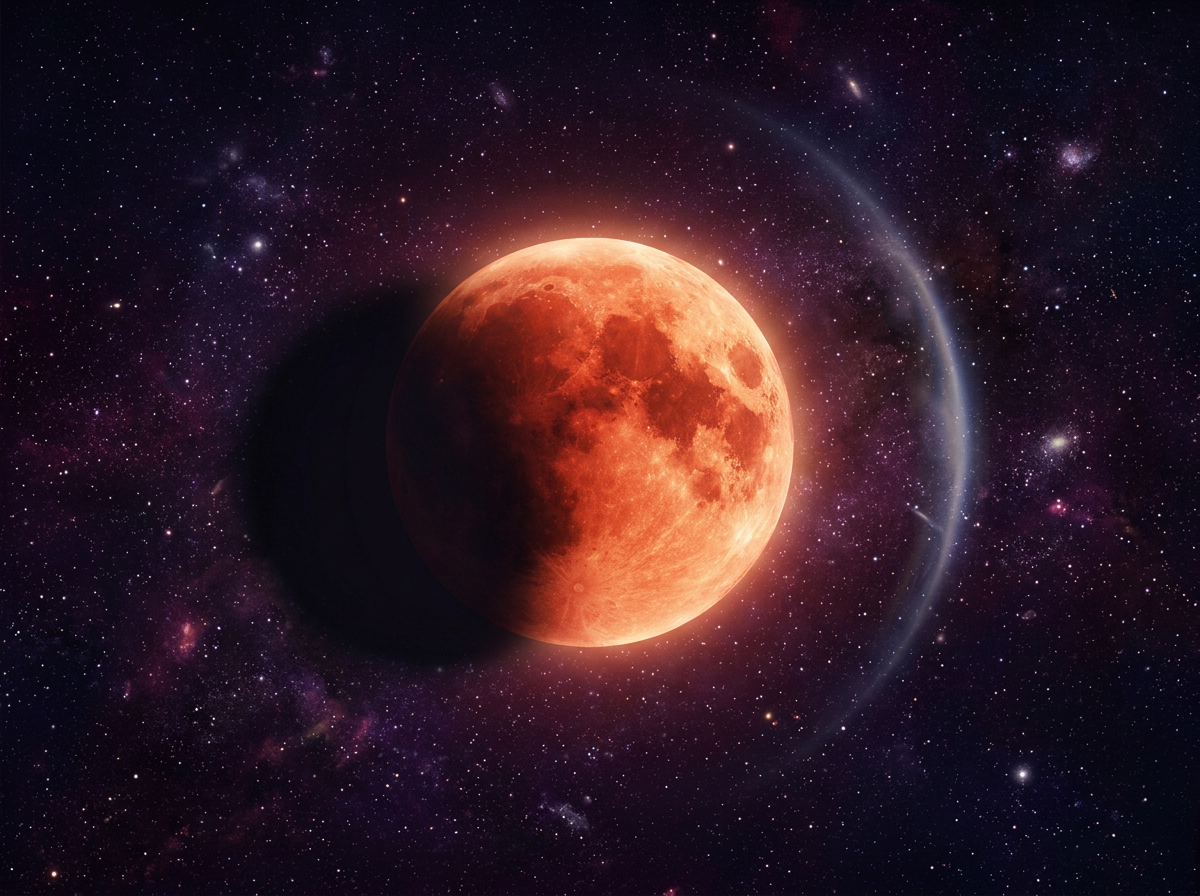
Aligns Sun → Earth → Moon automatically. Watch Earth's shadow sweep across the Moon and turn it a deep blood red.
Free Explore Mode
Drag the slider yourself to see what happens at every point in the Moon's orbit around Earth.
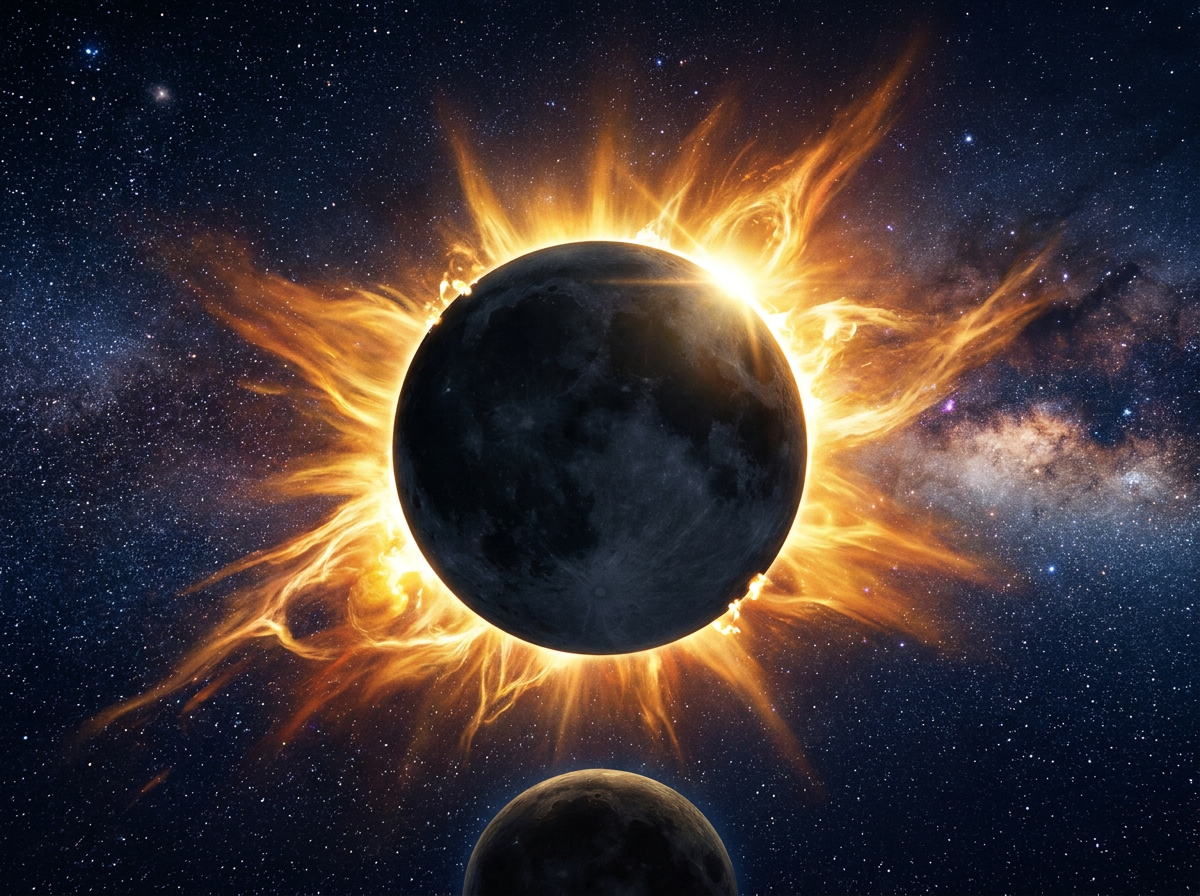
What Happens During a Solar Eclipse?
☀️ Sun · 🌑 Moon · 🌍 Earth
The Moon moves between the Sun and Earth and blocks some or all of the Sun's light.
Because the Moon is about 400 times smaller than the Sun but also 400 times closer to Earth, they look almost exactly the same size in our sky. When they line up perfectly, the Moon fits right over the Sun.
What Happens During a Lunar Eclipse?
☀️ Sun · 🌍 Earth · 🌑 Moon
Earth moves between the Sun and Moon, causing Earth's shadow to fall across the Moon.
Unlike a solar eclipse, anyone on the night side of Earth can watch a lunar eclipse safely with bare eyes. The Moon turns a coppery red because sunlight bends through Earth's atmosphere.
Why Don't Eclipses Happen Every Month?
The Moon orbits Earth once every 27.3 days — so why isn't there an eclipse every single month?
Because the Moon's orbit is tilted by about 5 degrees compared to Earth's orbit around the Sun. Most months, the Moon passes slightly above or below the Sun, missing the shadow alignment. Only when the orbits cross at just the right moment do we get an eclipse.
Umbra vs Penumbra: The Anatomy of a Shadow
Space shadows aren't just dark circles — they have two distinct parts that scientists study closely.
Dark Inner Core Shadow
The dark central region of the shadow where sunlight is completely blocked. If you stand inside Earth's umbra during a solar eclipse, you experience a total eclipse.
Lighter Outer Shadow
The lighter outer region where light is only partially blocked. Standing here gives you a partial eclipse — the Sun looks like a glowing crescent.
Quiz Your Knowledge 🌟
Score
0 / 3
1. Which eclipse happens when the Moon moves directly between the Sun and Earth?
2. Why does the Moon turn reddish during a total lunar eclipse?
3. True or False: You can safely look at a solar eclipse with bare eyes.
Space Explorer Safety 🕶️
Never look directly at the Sun without proper eye protection, even during an eclipse.
Regular sunglasses are NOT safe for viewing solar eclipses. Always use certified ISO 12312-2 eclipse glasses or a homemade pinhole projector to watch safely.